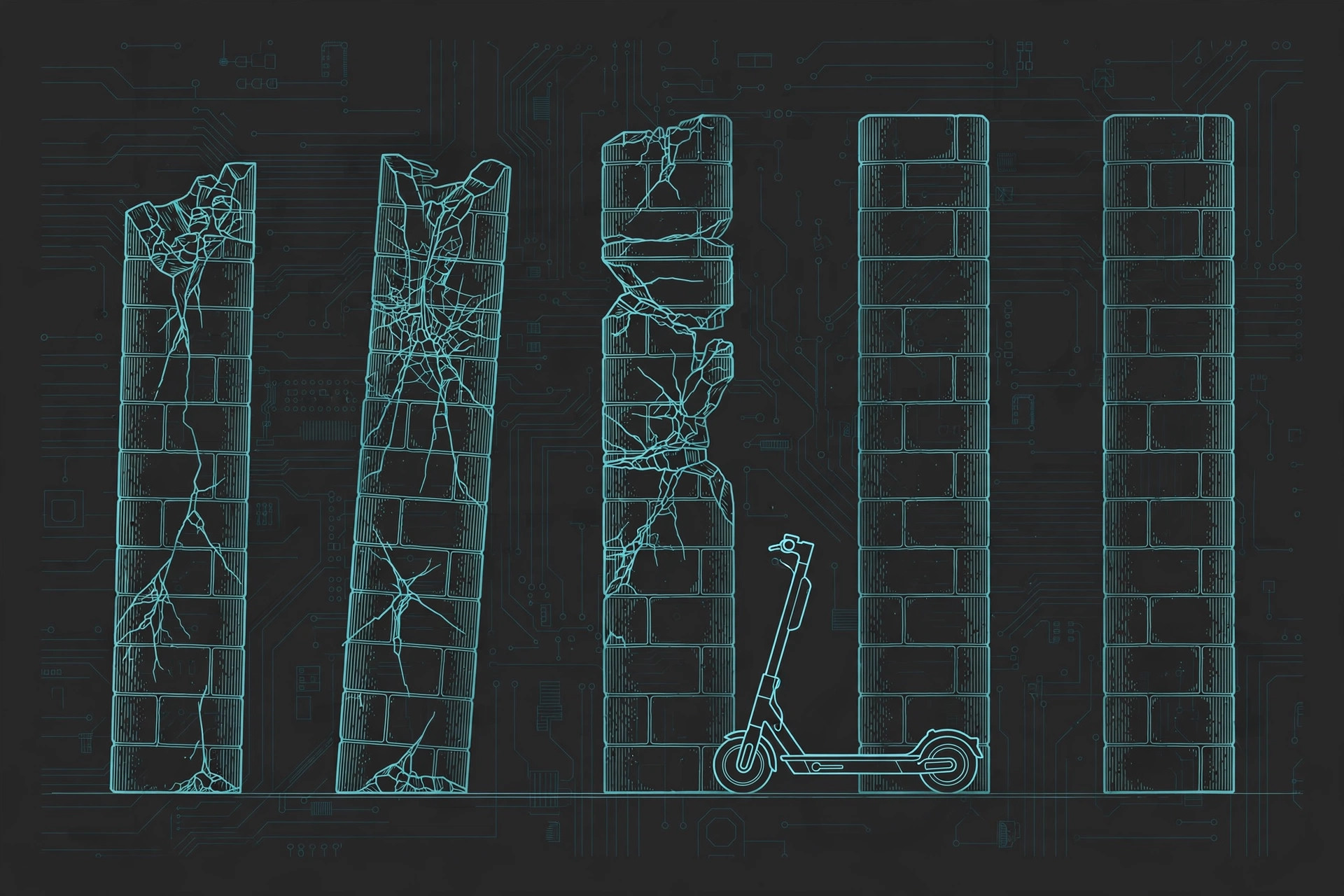
The answer first: Ola Electric has the sector and the factory, but not the leadership record, the balance sheet, or the cash flow the engine demands. The five-pillar method is meant to be strict, and here it is working as designed: a real vertical-integration option is not enough when execution has already failed twice in two years.
Pillar 1: Sunrise sector, PASS
India's electric two-wheeler market is a genuine sunrise sector: large, early in adoption, and policy-supported. The runway is not in question. What is in question is whether Ola gets to ride it.
Pillar 2: Leadership, FAIL
Bhavish Aggarwal has not done what he said. FY26 revenue guidance was missed by about 30%, market share fell from over 34% to 7.1%, and the governance flags are serious: Krutrim related-party payments of nearly 4x to Rs 100 Cr, a qualified Q1 FY27 review, and C-suite churn. The pass line is simple: two years of guidance met, share stabilized, and clean audits. None of those exist today.
Pillar 3: Moat, PARTIAL
The 4680 Bharat Cell and the gigafactory are a real potential moat: 2.5 GWh running, expanding toward 6 GWh, with about 15% of orders already on own cells. But cell cost per kWh is undisclosed, so the economics are a claim, not a fact. And the service crisis damaged brand trust, which is the moat that sells the scooter today. Potential is not possession.
Pillar 4: Iron fortress, FAIL
Rs 2,476 Cr of total borrowings in FY26, a going-concern key audit matter, a Rs 780 Cr QIP in June 2026, and board approval for up to Rs 1,500 Cr more in September 2026. A fortress does not raise survival capital twice in three months. The balance sheet is the reason this cannot be a core position.
Pillar 5: Free cash flow, FAIL
FY26 operating cash flow was about negative Rs 775 Cr, and the best quarter (Q4 FY26) still printed negative Rs 131 Cr of free cash flow. The direction may be improving, but the engine asks for cash, not direction. The Q1 FY27 improvement is partly built on a provision reversal the auditors qualified.
What would change each grade
Leadership: guidance met two years running and share stabilized above double digits. Moat: disclosed cell cost per kWh that undercuts purchased cells, plus service metrics repaired. Fortress: positive operating cash flow and no further raises. Until then, the engine says watch, not own.
Bottom line: Ola Electric is the strict engine's textbook case: sunrise sector, real asset, failed operator. The base-case Rs 70 target says the option has value. The 3-fail scorecard says the evidence does not. Speculation can wait for proof.
Download the full analysis (PDF)
Research and opinion, not investment advice. Do your own due diligence before investing.