
Frequently asked questions
How does Kothari Petrochemicals score on the five pillars?
Kothari Petrochemicals passes two of five pillars: iron fortress and free cash flow, with sunrise, leadership and moat grading partial. Borrowings are about Rs 2 crore against net worth of Rs 372 crore, operating cash flow was Rs 81 crore against PAT of Rs 72 crore in FY26, and promoter holding is 72.22% with zero pledging reported. The partials reflect a world PIB market growing at about 3.3% a year, single-plant feedstock dependence, and the pending amalgamation of loss-making Kothari Sugars.
Why does leadership only grade partial for Kothari Petrochemicals?
DalalBytes grades Kothari Petrochemicals' leadership partial because the record splits: operations pass (capacity debottlenecked to 48,000 tonnes in 2023, PAT doubled in four years, promoters bought more stock in September 2025, zero pledging), while the May 2026 decision to merge in the group's loss-making sugar company at one share for every five does not yet pass the capital allocation test for petrochemical minority shareholders. The shareholder vote is on November 13, 2026.
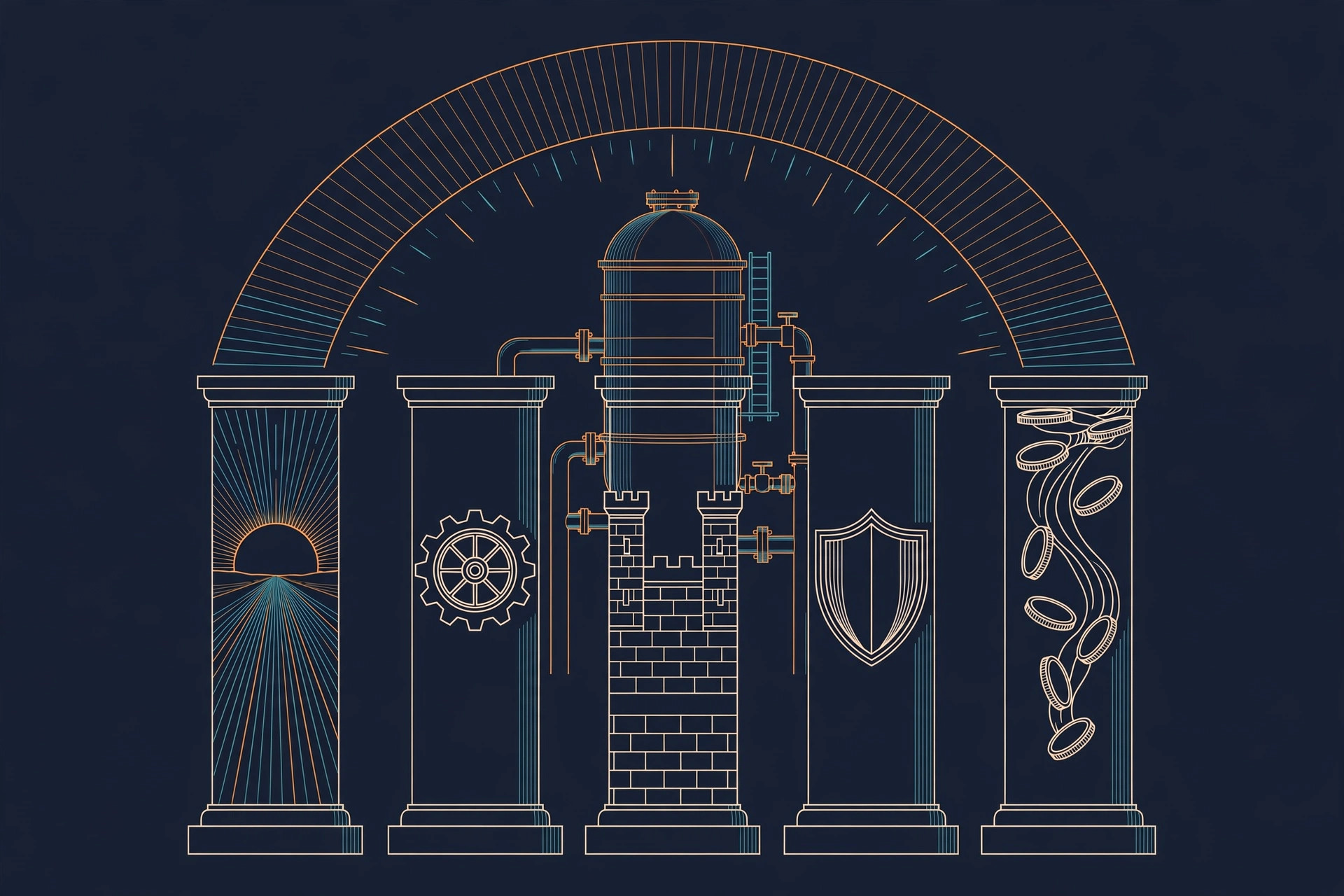
Pillar 1: Is the sector a sunrise? (PARTIAL)
World PIB demand is steady: about 1.12 million tonnes in 2026 growing to about 1.32 million tonnes by 2031, about 3.3% a year, led by lubricant additives, adhesives and tubeless tyres in Asia-Pacific, with India a growth region and Kothari its largest producer. But 3% volume growth is a mix and replacement story, not a demand wave, and the company's own revenue has been flat for three years. Richer grades and new uses are promising, not yet disclosed revenue. PARTIAL.
Pillar 2: Can the leadership execute? (PARTIAL)
Operations: the debottlenecking was delivered, FY26 production hit about 90% of plan in a disrupted year, margins recovered to about 16%, and promoters raised their holding to 72.22% with zero pledging. Capital allocation: the board then approved merging a loss-making group sugar company into this clean balance sheet. Process protections exist (KPMG valuation, fairness opinion, NSE no-objection, a dated vote), but the pillar grades allocation for all shareholders, and this transaction is not yet proven for petrochemical minorities. PARTIAL.
Pillar 3: Does a moat protect returns? (PARTIAL)
India's largest PIB capacity, a plant beside its feedstock refinery, and two decades of qualification into lubricant formulations make Kothari hard to displace at home, and 14% to 16% operating margins with 21% ROE corroborate a real edge. But PIB is a specification chemical: sophisticated buyers dual-source, import parity from global majors caps price, and feedstock from one refinery ecosystem is outside the company's control, as the 2026 rating watch showed. The moat protects the seat, not the input or the price. PARTIAL.
Pillar 4: Is the balance sheet a fortress? (PASS)
Borrowings of about Rs 2 crore, net worth of Rs 372 crore built entirely from retained profit, total debt to operating profit of 0.02 times and interest coverage of about 131 times on ICRA's measures, and Rs 104 crore of investments on Rs 442 crore of assets. The rating watch is about feedstock and the merger, not leverage, because there is essentially no leverage. The note inside the pass: if the merger completes, the fortress will be shared with a weaker business, and this grade gets revisited on combined accounts. PASS.
Pillar 5: Does the free cash flow show up? (PASS)
Operating cash flow of Rs 19 crore, Rs 26 crore, Rs 72 crore, Rs 59 crore and Rs 81 crore across FY22 to FY26, against PAT of Rs 33 crore, Rs 39 crore, Rs 64 crore, Rs 66 crore and Rs 72 crore: roughly full conversion over three years, with FY26 free cash flow of about Rs 62 crore after capex. The working capital book is tight (a cash cycle of about 30 days). What owners receive is the deduction: a Rs 1.00 dividend, about 8% payout, and no buyback. Generation and conversion pass clearly. PASS.
What would change the grade?
Leadership upgrades if the November 13, 2026 vote rejects the amalgamation or the combined entity posts a profitable, cash-converting first year, and downgrades if sugar losses are funded from PIB cash flow without a disclosed turnaround plan. Sunrise upgrades if revenue growth re-accelerates above the industry rate for two years, Moat upgrades on disclosed specialty-grade revenue, and Iron Fortress and Free Cash Flow are both re-graded on combined accounts if the merger completes.
© 2026 DalalBytes Research · For educational purposes only. Not investment advice.