Books
The research, written long. Books by Prakash Damodaran, built from the same work as the DalalBytes reports: real positions, real numbers, mistakes included.

From Bagholder to Multibagger
The Anatomy, Psychology, and Capital Rotation Behind Multibaggers
In 2023, Prakash Damodaran left a 27-year software career to invest full time. This book is the system he built on the other side of that decision: five pillars to judge a business, a checklist that argues back, and the psychology to hold a winner through a bear market without losing his nerve or his capital.
The record is in the book, wins and losses side by side. Palantir, researched for two years in a drawdown and held. Sweetgreen, in a chapter he calls the morgue. Nvidia, bought in 2008, forgotten, and sold far too early. Nothing is cleaned up.
For 27 years I was a worker bee, paid for my hours. An investor gets paid for something else entirely. He gets paid for the risk he takes and the value his investment generates.
From Chapter 10, The Hunt
Paperback, 139 pages. Live on Amazon at $13.99.
The prologue page includes an 11-minute narrated audio version.
Chapters about stocks the author owns are disclosure, not a recommendation. This book is educational, not investment advice.
Inside the book
The five pillars
A checklist for judging a business before money moves, and for re-judging it when the price falls.
Patient zero
Palantir, bought through a two-year drawdown and audited quarter by quarter while the world called it a consulting company in a software costume.
The morgue
The losers, written up with the same care as the winners, including the soggy-fries store visit that ended the Sweetgreen thesis.
The pre-flight checklist
Seven questions, written down and dated, that every position has to pass. The page readers photocopy.
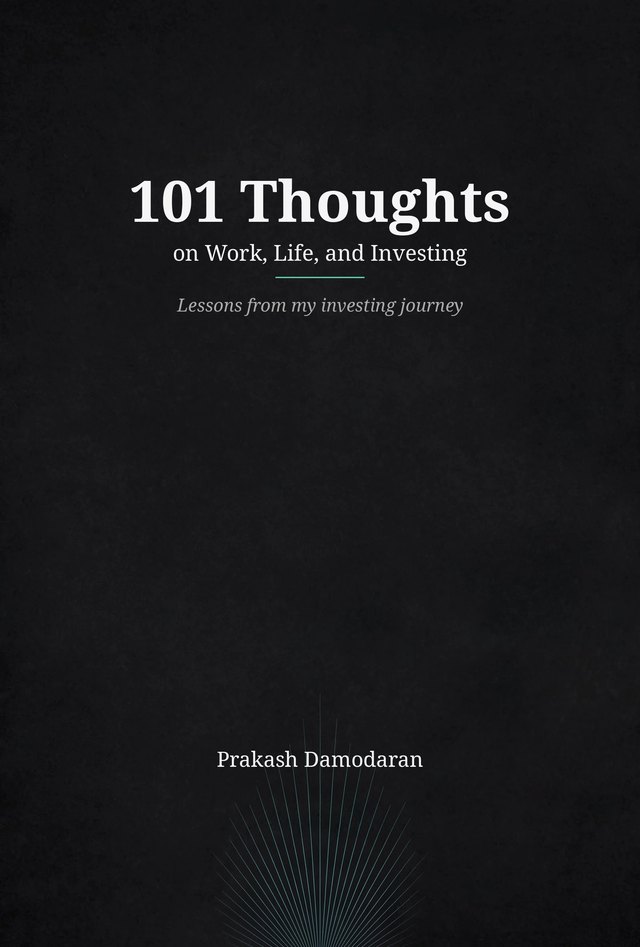
101 Thoughts on Work, Life, and Investing
Lessons from my investing journey
101 short lessons from twenty-seven years of building software and a second act as a full-time investor.
Each one was paid for. Some cost money: a 15-bagger held through a bear market that cut it in half twice. Some cost sleep: positions checked at midnight that were simply too big. All of them changed how I invest, and I wrote them down so I would stop relearning them.
They are organized in the order you actually need them. First learn to see a business clearly, in your own daily life. Then judge the people running it. Then decide what to pay and how much to own. Then master your own behavior, because that is where most returns are lost. Then handle the mechanics: cash flow, cycles, and rules written down before the panic. Finally, fit it all into a working life, because the true point of money is owning your calendar.
Read one thought with your morning coffee and meditate on it. That is 101 days, about three months. Or keep it on your desk and open it at random when the market gets loud. That is what it is for: a daily reset, not a textbook.
Paperback, 120 pages. Live on Amazon. The full text is also free on this site.
For educational purposes only. Not investment advice.
More to come
More books are in the works, including one on the path to financial independence. The Weekly Close readers hear about new books first.
Questions
Where can I buy From Bagholder to Multibagger?
On Amazon, in paperback, at $13.99. The book launched on October 26, 2026, and the paperback is sold through Amazon in the US, UK, EU, Japan, Canada, and Australia. The buy button on this page goes to the US store.
Can I read any of it free?
Yes. The full prologue is published on this site, with an 11-minute narrated audio version. It starts at six dollars, in a basement media room, in the middle of a bear market that spent a year chewing through the author's conviction.
Is this book investment advice?
No. It is one investor's record and method, written for education. Chapters that discuss stocks the author owns are disclosure, not a recommendation, and nothing in the book is a promise of returns.