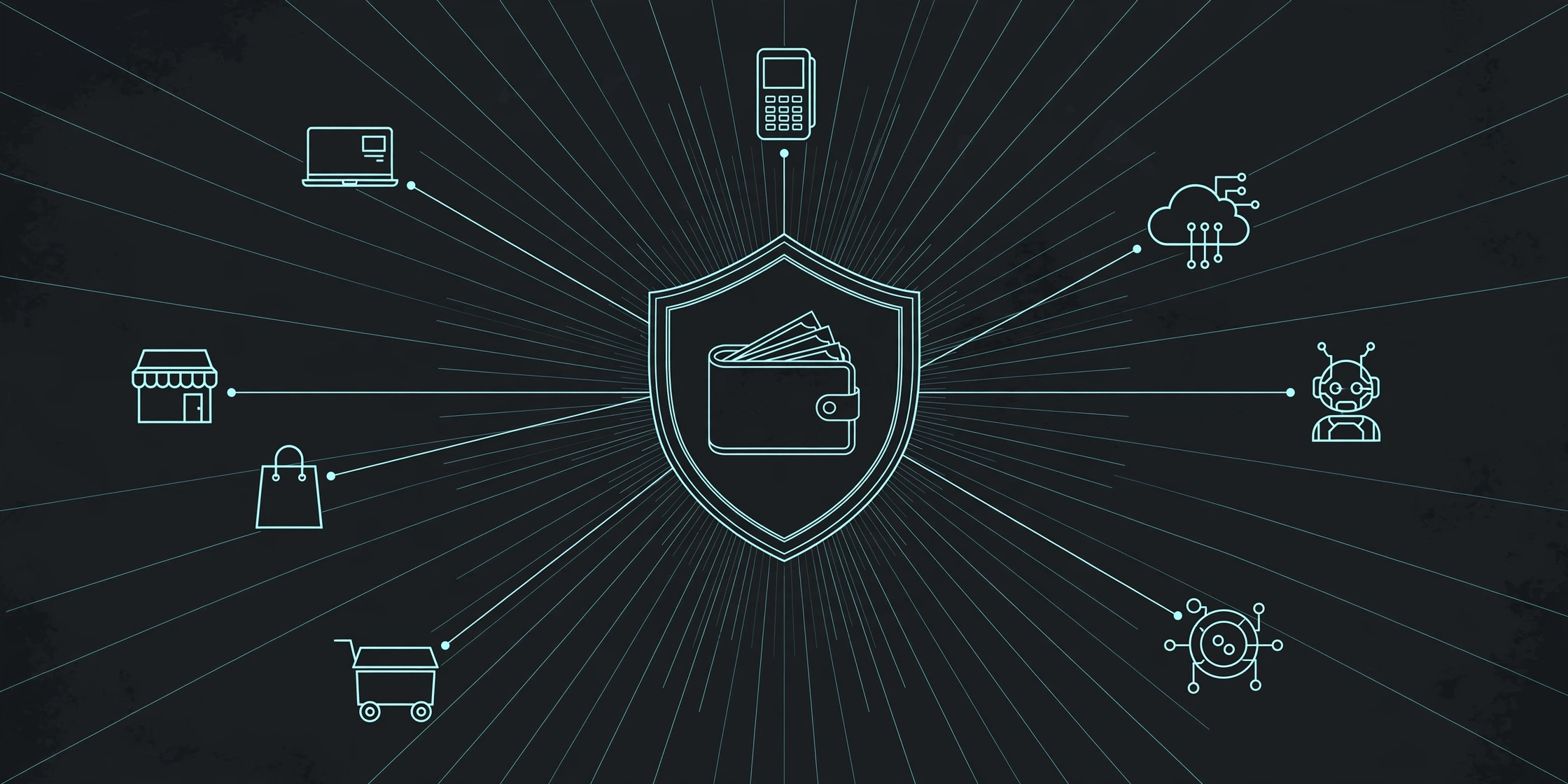
The answer first: PayPal is not broken. It is large, profitable, and trusted. But the five-pillar engine asks a harder question: can this business compound through a long new growth cycle under leadership that has proved it can scale that cycle? PayPal clears the financial tests, but not the two tests that create a generational winner.
Pillar 1: Sunrise sector, PARTIAL
The new channel is sunrise, but the core market is not. PayPal's revenue grew 21% in 2020; by 2025 growth had slowed to 4% on $33.2B of revenue, and branded checkout grew only about 2% currency-neutral in Q2 2026. Agentic commerce could create a new runway: PayPal has placed its wallet into ChatGPT, Google's AI checkout, and Meta's Muse. But the partnerships prove distribution, not monetization. No material revenue, payment volume, or transaction margin from agentic commerce has been disclosed yet.
Pillar 2: Leadership, PARTIAL
CEO Enrique Lores ran HP for more than six years and moved fast at PayPal: a three-unit reorganization, a plan to make PayPal "a technology company again," and $1.5B+ of targeted savings. But his PayPal scorecard is only two quarters old, and HP proves management, not growth: revenue was lower at the end of his tenure than near the start. The pass line by end of 2027: cleaner accountability, savings arriving without service failures, and branded checkout and Venmo monetization improving together.
Pillar 3: Moat, PASS (under pressure)
Trust is the moat. The consumer's saved identity and funding choices, wrapped in buyer protection, risk controls, and a familiar dispute path, reinforced by two-sided data, licenses across about 200 markets, and several routes to win: branded checkout, Venmo, Braintree, financial services and crypto, and agentic commerce. The strongest moat statement: consumers do not want to register a card with every agent. The pressure: Apple Pay owns device distribution, Shop Pay owns a commerce platform, and branded checkout growth of 2% is the warning signal.
Pillar 4: Iron fortress, PASS
$15.3B of cash and investments against $13.4B of debt at June 2026, for $1.9B of net cash. FY2025 free cash flow of $5.6B equals roughly 42% of June debt. The company can fund the plan, survive a bad cycle, and avoid raising desperate capital. The hidden caution: buybacks of $6.0B over twelve months plus a new dividend compete with reinvestment, and a payments company carries obligations a software balance sheet does not.
Pillar 5: Free cash flow, PASS
Cash generation is already present: $5.6B in 2025, $1.8B in Q2 2026, with management guiding above $6B adjusted FCF for 2026. The model is capital-light. But the inflection is not here yet: Q2 transaction margin dollars rose only 1% against 5% revenue growth, and non-GAAP operating margin fell 248 basis points to 17.4%. The clean confirmation is operating improvement across several quarters, not one cash number.
The next 18 months: five numbers that decide
Branded checkout growth toward mid-single digits. Transaction margin dollars growing faster than revenue. Venmo monetization compounding on 14% volume growth. Disclosed economics from agentic commerce. Operating leverage recovering as savings arrive without shrinking product velocity. The useful rule: do not let total payment volume hide the quality of the volume.
Bottom line: PayPal looks more like a high-cash-flow turnaround with a valuable option on agentic commerce than a proven sunrise compounder. At about $53.17, the market already prices it like a slow business. The thesis wins when PayPal becomes the wallet agents must offer, not merely one more payment option they can hide.
Download the full analysis (PDF)
Research and opinion, not investment advice. Do your own due diligence before investing.