Frequently asked questions
What does the OpenAI agreement actually cover?
The $20 billion-plus Master Relationship Agreement covers 750MW of inference capacity for 2026-2028, expandable to 2GW by 2030, plus a $1 billion OpenAI loan and 33 million-plus warrants. The customer is also the lender and a potential large shareholder. Revenue compounded from $78.7 million (2023) to $290.3 million (2024) to $510 million (2025, up 76%), with cloud revenue growing 287%.
What are the biggest risks in the Cerebras report?
Customer concentration: 86% of 2025 revenue came from two UAE-linked entities, and MBZUAI was 78% of receivables at year-end. The OpenAI entanglement stacks customer, lender, and shareholder in one relationship. The lockup expires November 10, 2026 with heavy insider selling, and TSMC is the single manufacturing source.
What is the blunt verdict on Cerebras?
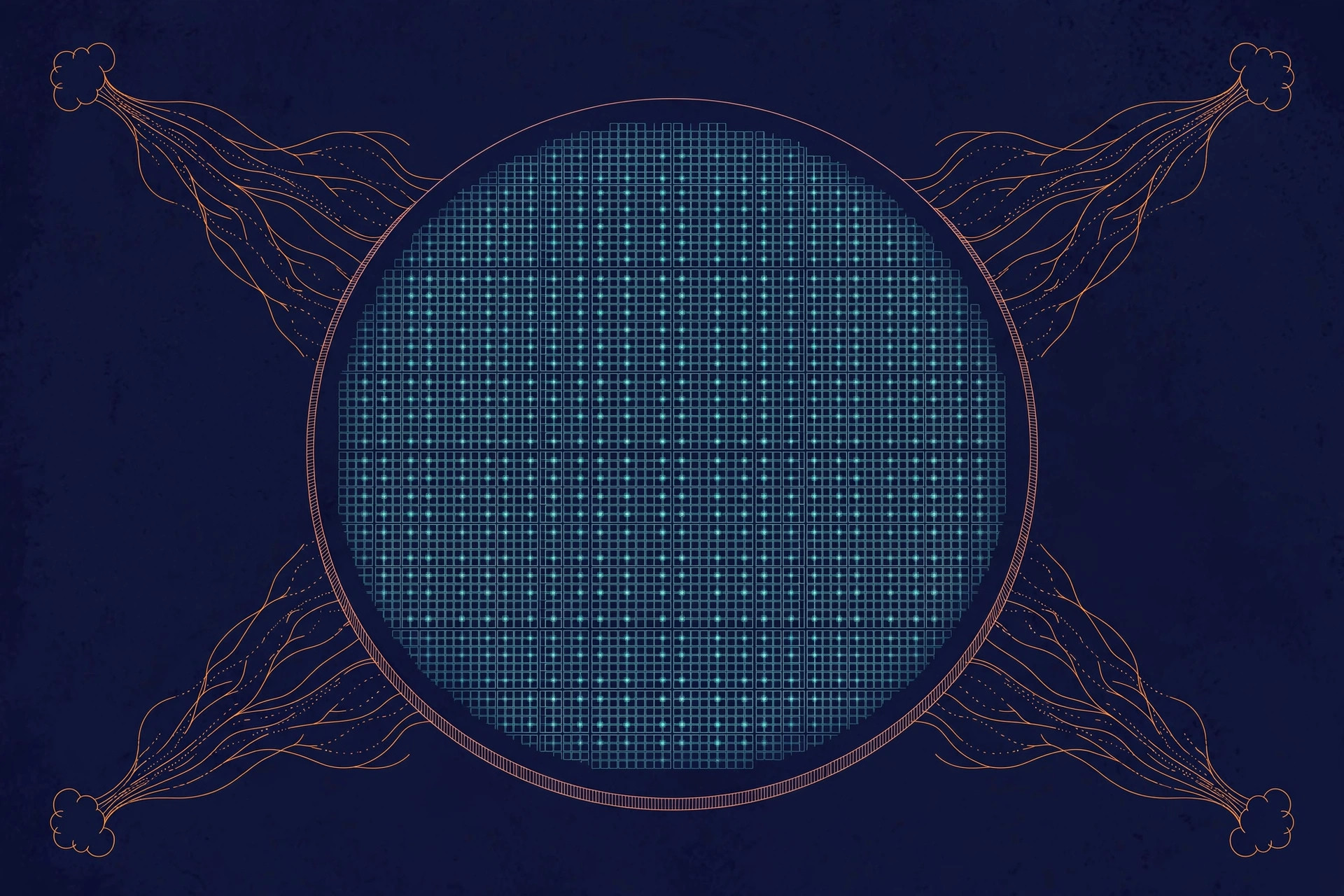
Cerebras builds the largest chips on earth and sells the fastest AI inference measured on large open-weight models: roughly 3 to 8 times the throughput of Groq's LPU and an order of magnitude above GPUs on long-form generation, independently benchmarked. The commercial proof arrived with the $20 billion-plus OpenAI Master Relationship Agreement (750 megawatts of inference capacity, 2026-2028, expandable to 2 gigawatts by 2030), a $25.4 billion remaining-performance-obligations backlog covering more than 60% of the current market capitalization, and a Q2 2026 cloud business growing 287% year over year. The May 2026 IPO raised $5.55 billion at $185, the largest US technology IPO of the year at the time, and the balance sheet carries no debt.
The other side is unusually concentrated risk. Two UAE-linked entities (MBZUAI at 62% and G42 at 24%) were 86% of 2025 revenue, and MBZUAI was 78% of receivables at year-end. The customer is also, via OpenAI's $1 billion loan and 33 million-plus warrants, the lender and a potential large shareholder, with Sam Altman's early personal investment formally disclosed as a conflict. The main lockup expires November 10, 2026, insiders have sold over $110 million, multiple securities-law investigations are open, and TSMC is the only foundry on earth that can build these chips. At roughly 50 times forward sales, the price assumes flawless execution. A 68/100 Selective Positive says: real technology, real contracted backlog, but a binary risk profile that demands position sizing, not conviction sizing.
What is the founding story?
Founded in 2015 by five engineers who had already built and sold a company together: Andrew Feldman and Gary Lauterbach started SeaMicro in 2007, sold it to AMD in 2012 for $334 million, and reunited with Michael James, Sean Lie, and Jean-Philippe Fricker around one contrarian premise, that GPUs were not the optimal semiconductor for coming AI workloads. They chose wafer-scale integration, building the processor out of the entire silicon wafer, an idea considered impractical for decades. After burning about $8 million a month and $200 million solving cooling, defect-routing, and packaging problems, a working product emerged in July 2019. The WSE generations shipped on cadence: WSE-1 in 2019, WSE-2 in 2021, WSE-3 in March 2024 (5nm, 4 trillion transistors, 900,000 cores), and the CS-4 system in August 2026. A first IPO attempt in September 2024 was withdrawn in late 2025 over CFIUS scrutiny of the G42 relationship; the refiled May 2026 offering priced at $185, opened near $350, and closed day one at $311, up 68%.
Why does wafer-scale matter for inference?
LLM generation is bottlenecked by moving model weights from memory to compute. The WSE-3 keeps the entire model in 44GB of on-chip SRAM with about 21 petabytes per second of memory bandwidth, so weights never shuttle to external HBM. Independently benchmarked throughput: GPT-OSS-120B at roughly 1,700-3,000 tokens/sec vs Groq's 475-493 (about 3.5-6x), Llama 3.3 70B at 2,100-2,500 vs Groq's roughly 294-750 (about 3-8x), all at full 16-bit precision. Two honest qualifications: Groq wins time-to-first-token (0.6-0.9 seconds), the metric for interactive chat, while Cerebras wins sustained throughput, the metric for long-form generation and agentic loops; and 44GB of SRAM is finite, which is why the September 2026 disaggregated-inference work (5x throughput gain using partner silicon for prefill, WSE for decode, with AMD and AWS partnerships) matters strategically.
What is in the OpenAI agreement and the financials?
The $20 billion-plus OpenAI Master Relationship Agreement covers 750MW of inference capacity for 2026-2028, expandable to 2GW by 2030, plus a $1 billion OpenAI loan and 33 million-plus warrants. Revenue compounded from $78.7 million (2023) to $290.3 million (2024) to $510 million (2025, up 76%), with cloud growing 99% and hardware 69%. Q2 2026 core revenue was $209.9 million (up 103% YoY, 8% above consensus), core cloud $127.7 million (up 287% on the OpenAI ramp), core hardware $82.1 million (up 17%), with a loss of $0.04/share that beat by 81%. Full-year 2026 core revenue guidance was raised to $880-890 million, with an ambition to more than triple in 2027. The chassis burns cash: negative 265% operating margin in Q2, R&D at 48% of 2025 sales, capex jumping from $23.4 million to $382.7 million. Note: 2025 GAAP net income of $237.8 million included a $363.3 million one-time non-cash gain; the non-GAAP reality was a $75.7 million loss.
Who is the competition?
Three axes. First, NVIDIA: the moat is CUDA and the developer ecosystem, not the chip; Cerebras wins on inference throughput per the benchmarks but nobody should underwrite it on beating NVIDIA broadly. Second, Groq and the inference specialists: Cerebras leads on measured throughput by 3-8x while Groq leads on time-to-first-token, and industry-wide price-per-token compression punishes everyone on margin. Third, custom silicon (Google TPUs, AWS Trainium, Meta MTIA, OpenAI's own ambitions): the structural risk is vertical integration by the largest buyers, and the defense is that wafer-scale throughput is genuinely hard to replicate, with the AMD and AWS partnerships co-opting the axis by making partner silicon Cerebras's prefill tier.
Who runs the company: management and governance?
Andrew Feldman is a proven founder in the same domain with a decade committed to one architecture, but this is his first public-company CEO role at a $40 billion valuation. The governance flags belong in the report, not the footnotes: the OpenAI relationship stacks customer, lender, and shareholder in one counterparty with a disclosed Altman conflict; insider selling since the IPO exceeds $110 million even under 10b5-1 plans; multiple securities-law investigations opened within months of listing. None of this is disqualifying, but it is why the rating is Selective Positive rather than Positive.
What are the valuation scenarios?
At $166.43: about 45x 2026 guided revenue of $885 million, about 50x forward estimates, no P/E. Street: 13 analysts, Moderate Buy (1 Strong Buy, 9 Buy, 2 Hold, 1 Sell), average target $299.90 (high $330, low $275), about 80% upside. Mizuho holds a Buy; ARK has been accumulating. The valuation debate in one line: the $25.4B backlog is 1.6x the $39.5B market cap, which looks reasonable, while the P&L (negative 265% operating margin, 86% concentration) says the backlog is one relationship away from a restatement, which looks terrifying. Both are true.
2029 scenarios (calendar, about 295M fully diluted shares, all assume the OpenAI 750MW deploys): bear $95 ($4.0B revenue, diversification stalls, 7x sales), base $290 ($8.5B revenue, 2027 triples per guidance then about 85% and 70% growth, AWS Bedrock plus one more hyperscaler convert, 10x sales), bull $570 ($14B revenue, OpenAI toward 2GW, two more hyperscalers, 12x sales). The Street's $299.90 average target sits just above base on a nearer horizon: the market is already underwriting the 2027 tripling.
What are the key risks?
Customer concentration (86% of 2025 revenue from two UAE-linked entities), the OpenAI entanglement (customer, $1B lender, 33M-plus warrant holder, Altman conflict, unconfirmed reports of a shift toward NVIDIA), lockup expiry on November 10, 2026 with heavy insider selling, TSMC as the single manufacturable foundry, cash burn with profitability years away, roughly 50x forward sales with zero tolerance for misses, open securities investigations, and no CUDA-equivalent ecosystem. The one-line watch: OpenAI deployment milestones, the second large customer, and gross margin on the cloud mix.
© 2026 DalalBytes Research · For educational purposes only. Not investment advice.